
Don’t miss a post. Click here to sign up for our free newsletter.
Over the years, students have often asked, “What should I read if I want to understand Tai Chi more deeply?”
Books, of course, cannot replace practice. They cannot give you root, softness, or the feeling of flow. But the right book at the right time can open a door. It can help you see what you are already practicing with fresh eyes.
Here are the texts that have shaped my own journey — and that I return to again and again.
Tai Chi–The Perfect Exercise: Finding Health, Happiness, Balance, and Strength
Arthur Rosenfeld | https://a.co/d/08gpzI9J
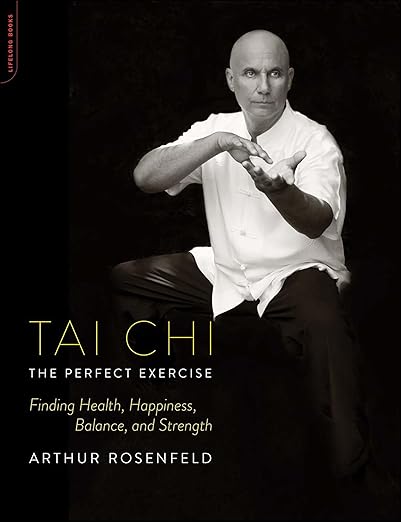
If you are new to Tai Chi, or if you want to revisit the foundations with clarity, this is a beautiful starting point. Arthur Rosenfeld does not overwhelm with technical detail. Instead, he explores the basic principles and the quiet intelligence behind the art — balance, relaxation, structure, and awareness.
It’s a gentle but compelling introduction that helps you understand why Tai Chi works and why so many people feel transformed by it. This is the book I often recommend to those standing at the beginning of the path.
Laoshi: Tai Chi, Teachers, and the Pursuit of Principle
Laoshi’s Legacy: Emergence from Shadow
Jan Kauskas | https://a.co/d/0cJNDJN3 | https://a.co/d/0gjrfc0M
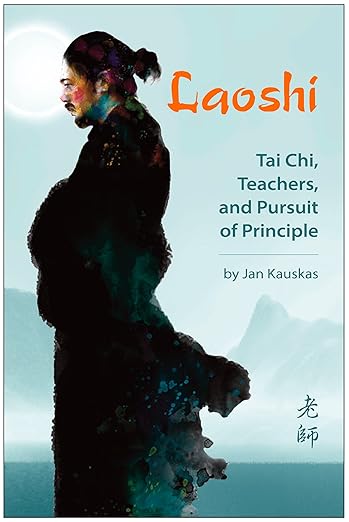
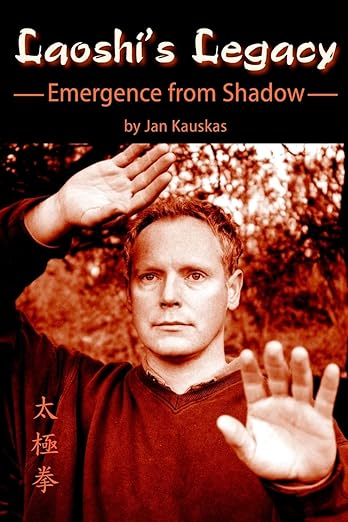
These are among my personal favorites. If you want to go deeper — beyond choreography and into the philosophical and structural thinking behind Tai Chi — Jan Kauskas offers a rare and thoughtful voice.
These books explore the pursuit of principle. Not perfection of form, but refinement of understanding. They read almost like a conversation with a seasoned practitioner reflecting honestly on teachers, lineage, growth, and the subtle challenges of staying true to the art.
If you’re ready to look beneath the surface, these are rich companions.
There Are No Secrets: Professor Cheng Man Ch’ing and His T’ai Chi Chuan
Gateway to the Miraculous: Further Explorations in the Tao of Cheng Man Ch’ing
Wolfe Lowenthal | https://a.co/d/0hIC06wW | https://a.co/d/0cHLoYzy
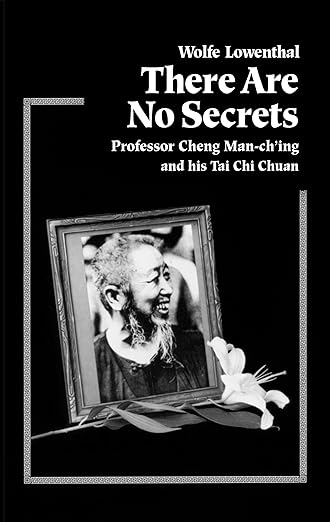
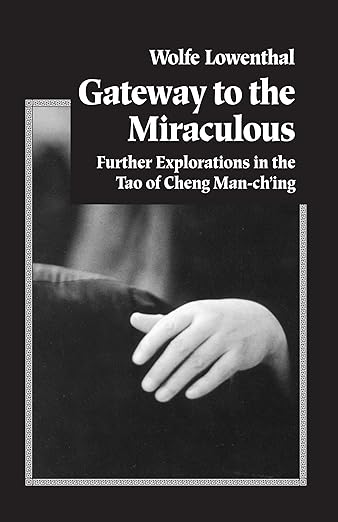
Reading Wolfe Lowenthal feels like drinking from the source. As a direct student of Cheng Man Ch’ing, he shares reflections, stories, and teachings that bring us as close as we can likely get — as Western readers — to the thinking of a classic master.
These books are not rigid manuals. They are windows into how Cheng viewed life, movement, and cultivation. They help you understand that Tai Chi is not a collection of techniques. It is a way of seeing.
For many Western practitioners, this is the most accessible doorway into a traditional master’s mind.
The Essence of T’ai Chi Ch’uan: The Literary Tradition
Benjamin Lo | https://a.co/d/06YVh72z
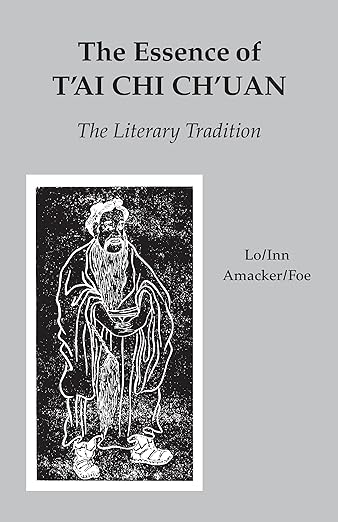
This is not light reading. It is the root.
Benjamin Lo compiled classic Tai Chi writings that form the backbone of both traditional and modern teaching. Some passages may feel abstract at first. That’s normal. These texts were meant to be reflected upon, not consumed quickly.
Read it slowly. Come back to it repeatedly. Each time, new layers reveal themselves. It is a lifelong companion for anyone serious about understanding where our art comes from.
365 Days of Tao: A Daily One-Page Guide to the Tao Te Ching for Simplicity, Stillness, and a Calmer Life
Dae Lee | https://a.co/d/0baa3zcu
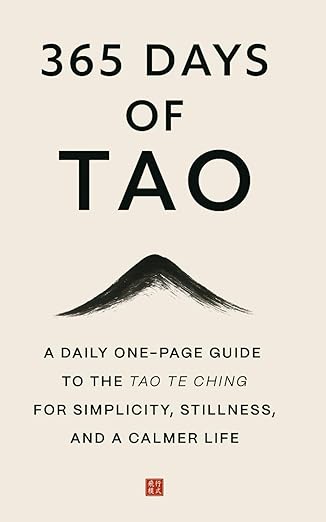
If the Tao Te Ching has ever felt distant or difficult, this book makes it approachable. In my opinion, it is one of the most accessible ways to reflect on Lao-Tse’s wisdom in a Western context.
Each day offers a simple idea and a short reflection. It invites stillness without overwhelming you. For Tai Chi practitioners — and really for anyone seeking a calmer life — it’s a practical way to integrate Taoist thinking into daily living.
Zen in the Martial Arts
Joe Hyams | https://a.co/d/03FcdEXE
In my — and Uli’s — mind, this is one of the best books ever written on martial arts and life principles.
It inspired us, years ago, to dabble in writing ourselves — though we would never claim to reach this benchmark. Joe Hyams weaves storytelling with insight in a way that speaks not only to martial artists, but to anyone navigating challenge, ego, fear, and growth.
It is entertaining. It is wise. And it stays with you.
The Art of War
Sun Tzu | https://a.co/d/0hyV1PIf
This classic has been read in Ivy League classrooms and corporate boardrooms alike. Many quote it. Fewer truly understand it.
While not a Tai Chi manual, its insights into timing, strategy, yielding, and intelligent action align deeply with internal martial arts. At its heart, it is about awareness, positioning, and understanding the dynamics between strength and softness.
When read through the lens of Tai Chi, it becomes less about conflict — and more about wisdom in motion.
Books alone will not make you skillful. But they can deepen your appreciation. They can help you connect the dots between philosophy, structure, and daily practice.
Read slowly. Reflect often. Then step onto the floor — and let the body understand what the mind has begun to explore.
If you have a favorite that shaped your own Tai Chi journey, I’d love to hear about it.